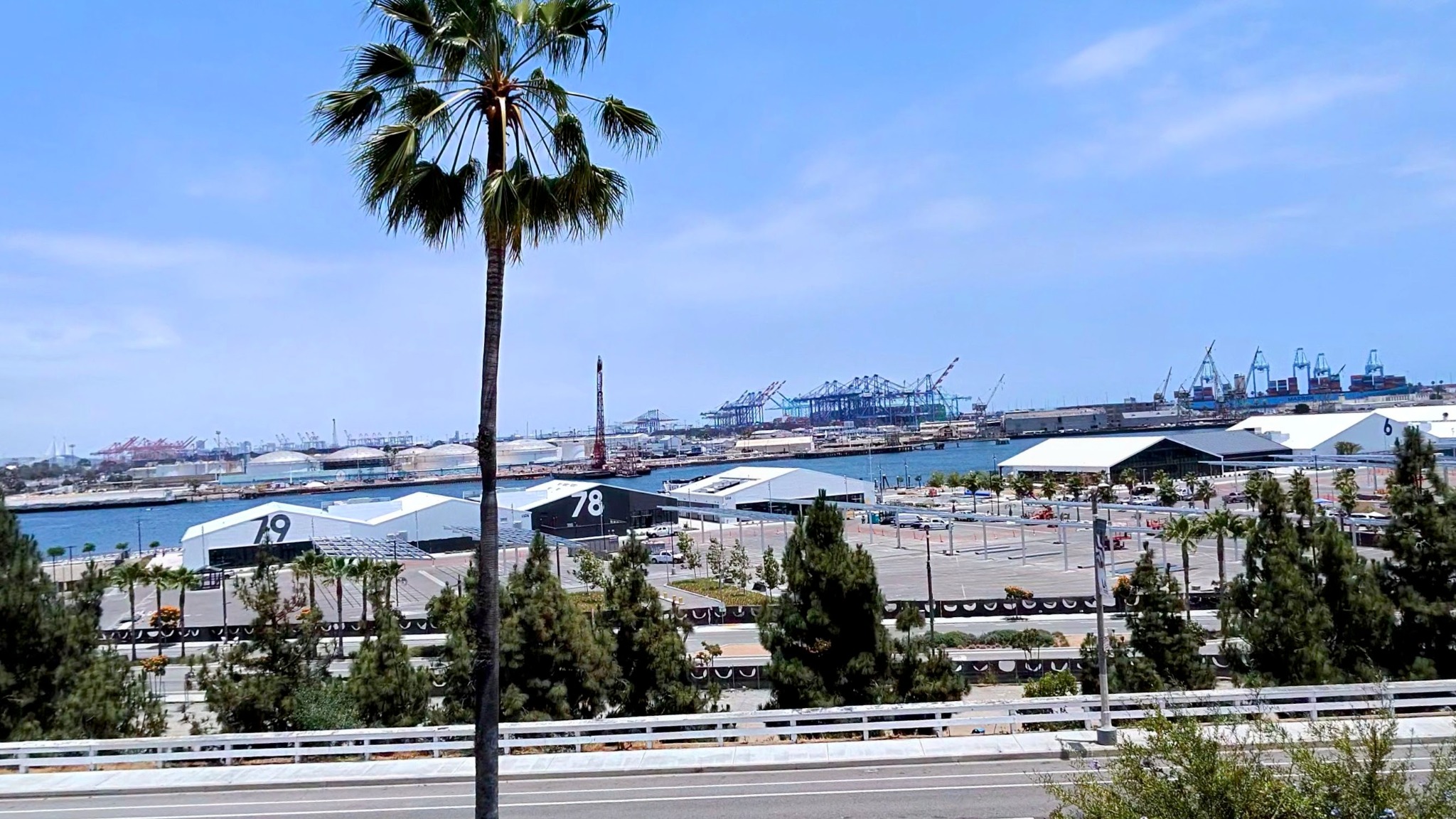
A practical agenda for turning waterfront activity into broader value for San Pedro.
Long before San Pedro's waterfront became the subject of redevelopment plans, I knew it as a workplace.
I grew up working at the San Pedro Fish Market, where Christmas Eve and other holiday weekends meant packed tables, long shifts, and mariachi carrying across the harbor. Those crowds weren't an abstract measure of attendance. They supported paychecks, sustained a local institution, and helped make the waterfront part of San Pedro's identity.
That was true far beyond the Fish Market. For ILWU members and terminal workers, commercial fishermen, truck and logistics workers, public employees, restaurant workers, and the many businesses connected to them, the waterfront was never simply a destination. It was a source of work, identity, and opportunity that reached across the Harbor Area.
That experience shaped how I understand the opportunity now taking form.
Several projects San Pedro has waited years for are now converging. West Harbor is opening in phases, with permanent restaurants and additional attractions still to come. Battleship IOWA is expanding its educational, workforce, and civic mission. Cruise activity reached a record 1.6 million passengers in 2025, and the Port has selected Pacific Cruise Terminals, a joint venture between Carrix and JLC Infrastructure, to transform the Outer Harbor with a new cruise center.
Together, these investments are giving more people a reason to come to San Pedro.
People are coming. The question is what happens after they arrive.
That is a good problem to have, and it is a sign that the waterfront investment is beginning to do what many people hoped it would do.
But attracting people to the waterfront is only the first measure of success.
The larger test is whether that activity produces lasting value beyond the water's edge. We don't yet know whether it will show up as more customers for local businesses, stronger cultural institutions, occupied storefronts, additional hotel stays, new jobs, and more reasons to invest in the rest of San Pedro.
That is what I mean by a San Pedro Waterfront Dividend.
The waterfront is beginning to deliver on a promise San Pedro has waited years to see fulfilled. Our responsibility now is to make sure the opportunity doesn't stop at the water's edge.
What the Waterfront Dividend Means
A San Pedro Waterfront Dividend is the measurable share of waterfront activity that reaches Downtown, local businesses, and community institutions.
It might be a family that visits West Harbor and then has dinner Downtown. A cruise passenger who spends the night before sailing, visits Battleship IOWA, or finds a few hours to explore. A visitor who attends a show, stops at a restaurant, visits a museum, or discovers another part of San Pedro.
It can also be less visible at first: a local business gaining enough customers to stay open, a vacant storefront becoming viable, a new job, or a property owner deciding that a building is worth improving.
Not every visitor will do all of those things. They won't.
To keep the idea simple, we can ask three questions:
Reach: Did more people come to the waterfront?
Connection: What share of waterfront visitors continued into Downtown or visited another San Pedro institution?
Capture: Did Downtown businesses, hotels, museums, cultural organizations, and nonprofits capture measurable value?
The point is to make more of San Pedro visible, accessible, and worth visiting, while making it easier for visitors to return or stay longer.
If West Harbor is full while nearby Downtown streets stay quiet, that won't mean West Harbor has failed. It will mean San Pedro hasn't yet built the connections needed to turn a successful waterfront destination into broader value for the community.
Hoping the activity spreads beyond the waterfront isn't a strategy. The connection has to be designed, operated, and measured.
Much of the foundation is already here.
The Port has invested heavily in public access, roads, parks, and promenades. The $32.9 million Town Square and Promenade Phase I created a nearly mile-long public connection meeting Sixth Street. The 2018 Harbor Boulevard project added the roadway realignment, traffic signal, bike lanes, marked crosswalks, lighting, landscaping, and walkways. The Plaza Park hillside along Miner Street received more than 700 plants, nearly 100 trees, and new benches. The Port has also adopted a final San Pedro Waterfront Connectivity Plan.
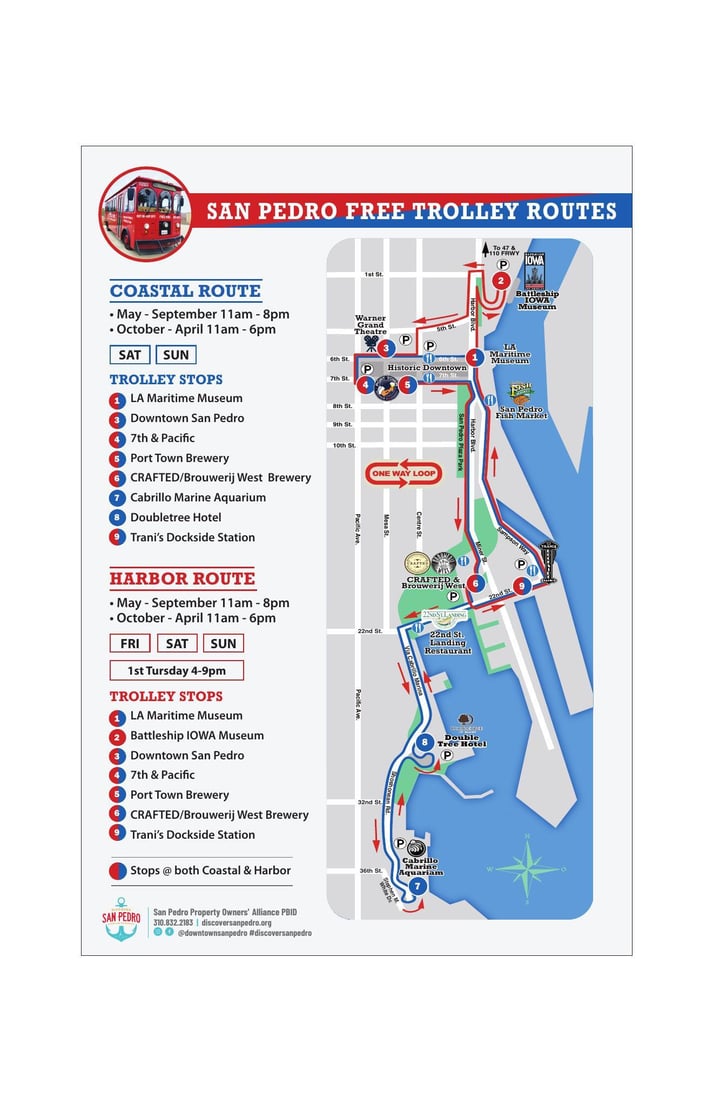
The San Pedro Historic Waterfront Business Improvement District already operates free hop-on and hop-off trolleys serving Downtown and the waterfront. The Chamber publishes an official visitors guide and operates a Tourism Ambassador Program.
I don't want to erase that work to make the case for what should happen next.
The next job is to make these investments work together and prove that the benefit is reaching beyond the waterfront.
West Harbor can't create Downtown foot traffic by itself. The Port can't activate privately owned storefronts. The Chamber can't market its way around a confusing physical experience. Small businesses can't extend their hours indefinitely without evidence that customers will be there.
Connect the places we have already invested in
Much of the foundation is already here.
The work now is connecting the destinations San Pedro already has.
A visitor should be able to leave the waterfront, understand where Downtown begins, and keep moving toward a restaurant, gallery, show, or another destination without stopping to solve the route.
That takes clear wayfinding, visible crossings, reliable trolley information, maintained public spaces, and storefronts that give people a reason to continue.
The proposed Waterfront-to-Downtown Loop would connect the cruise terminals, Battleship IOWA, Town Square, West Harbor, Downtown, Pacific Avenue, the Arts District, Plaza Park, and Miner Street in one legible visitor route.
Create a real waterfront arrival point
A visitor with luggage, a boarding pass, and several hours to spend shouldn't have to conduct a planning exercise on the sidewalk.
They need clear answers. Where can they leave their bags? What can they reach on foot? When is the next trolley? What is happening in Downtown? Where can they eat, shop, or visit before leaving?
A visible welcome and mobility point near the primary waterfront arrival area provides walking times, trolley information, visitor assistance, luggage storage through participating businesses, and reservations for local experiences.
Battleship IOWA already demonstrates one end of the solution by providing day-use luggage storage near the cruise terminal.
Lee Williams has also raised the possibility of creating another luggage-storage option at Crafted. That remains a proposal, not an existing service. Two practical luggage-storage points helps visitors move between the waterfront and Downtown without dragging bags through the experience.
A waterfront arrival point should also create a memorable sense of arrival. A public design process could invite local artists to develop a landmark grounded in San Pedro's maritime identity, including the Vincent Thomas Bridge, Angels Gate Lighthouse, harbor signals, working cranes, and the people who built this community.
The visitor shouldn't have to know San Pedro to find San Pedro.
Finish Downtown's front doors
Sixth and Seventh Streets are the most direct connections between Downtown and the waterfront. Pacific Avenue is the commercial spine that can carry activity farther into the community.
The infrastructure is largely there. The experience remains inconsistent from block to block.
A sign pointing toward Downtown isn't enough if a visitor can't tell what is there or whether the walk will be worth it. The route needs consistent wayfinding, clean sidewalks, visible crossings, lighting, shade, public art, trolley stops, and active storefronts.
Vacant storefronts could host temporary galleries, visitor services, pop-up businesses, and local vendors during major waterfront events.
This isn't theoretical. Last year, the Renaissance Group made space available at 311 W. Seventh Street for a temporary partnership with Friends of Cabrillo Marine Aquarium. For months, the storefront operated as a local cultural and visitor asset while a permanent use was being considered.
The same event calendar should reach trolley operators, hotels, attractions, and participating businesses.
Downtown property owners have a role too. Buildings need to be maintained, up to code, and offered on terms that give good local businesses a real chance to open and stay open. Better wayfinding will not solve storefronts that are not usable.
Not every business can remain open for every cruise call or event. We can identify the highest-opportunity dates and coordinate extended hours, local offers, and programming around them.
Sixth, Seventh, and Pacific should work as the front doors to the larger San Pedro experience.
Explore a Miner Street Harbor View Walk
When you look closely at the Miner Street bluff, the opportunity is obvious.
The road, bike lane, palms, and harbor views are already there. So are gaps in maintenance and the absence of any clear invitation to stop, look around, or continue into the rest of San Pedro.
The first phase should focus on care. Restore sightlines, remove dead brush and visual clutter, repair obvious sidewalk and curb problems, and establish funded recurring maintenance. Temporary installations by local artists could begin giving the corridor a stronger identity.
Before pursuing a larger capital project, we should determine who owns, controls, and maintains each part of the corridor. We can then evaluate practical additions such as native planting, seating, lighting, maritime art, and small overlook areas.
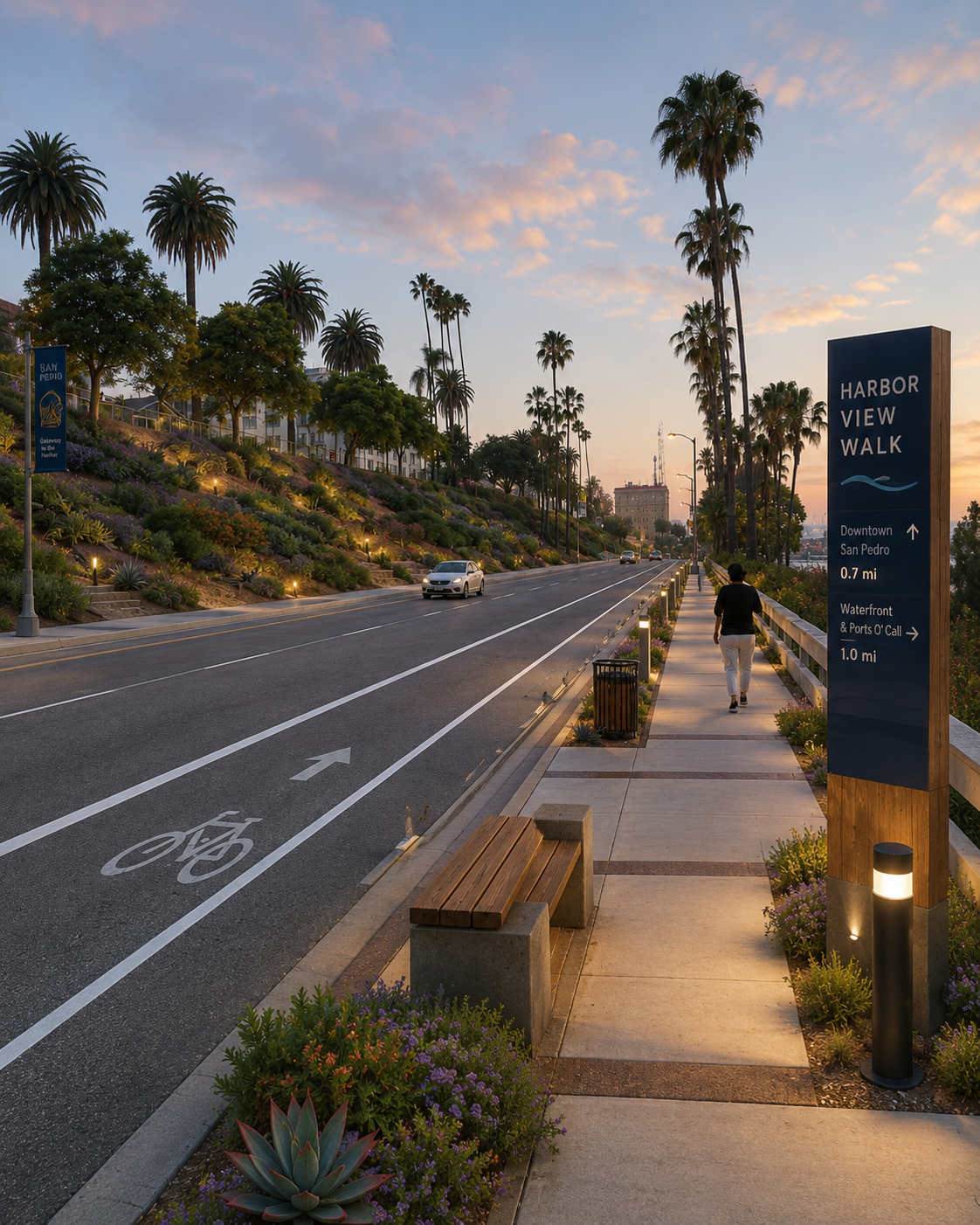
Miner Street is a case for protecting the value we have already created before asking for another major capital project.
Use the former courthouse site to anchor Downtown
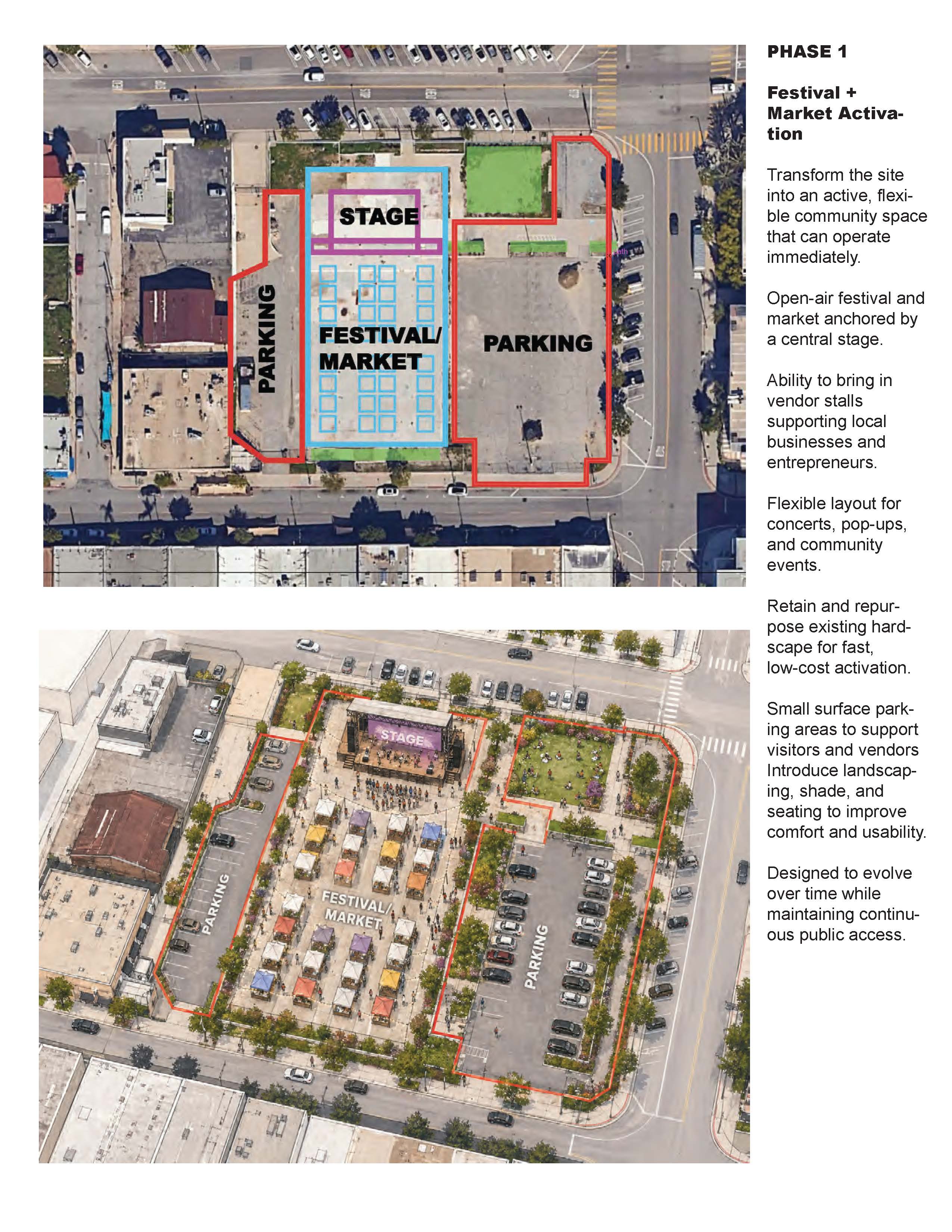
The former courthouse site at Sixth and Centre remains one of San Pedro's most consequential development opportunities.
It sits at the intersection of Downtown, the Arts District, and the waterfront gateway. San Pedro has very few sites with this combination of visibility, scale, and economic potential.
Whatever proposal comes next should go through a transparent and competitive public process with clear evaluation criteria. Those criteria should include Downtown activity, jobs, visitor spending, public benefit, parking, mobility, support for local businesses, and long-term economic value.
My preference is a hotel-led, visitor-serving mixed-use development with active ground-floor uses and meaningful public space. Housing, cultural uses, restaurants, retail, and parking could strengthen the right proposal.
The site's primary job should be connecting Downtown activity to the waterfront while adding lodging capacity, private investment, and a broader mix of daily and evening activity.
While a permanent development is pursued, the property supports temporary festivals, community events, markets, and appropriately managed parking. Interim use creates activity while preserving flexibility for the site's long-term future.
The decision should be guided by what creates the greatest lasting public value for Downtown and strengthens its connection to the waterfront.
Give visitors reasons to stay
The Chamber already publishes an official visitors guide and operates a Tourism Ambassador Program. Downtown and waterfront organizations already promote events, attractions, and local businesses. The BID already runs free trolley service between Downtown and the waterfront.
I see Before You Sail. Stay After. as a way to organize and extend the tourism work already underway.
Be realistic about cruise passengers
Cruise passengers will be one of the hardest audiences to reach. For cruises that begin and end here, San Pedro will function primarily as a home port, not necessarily an excursion stop. Many passengers will arrive with a fixed schedule, limited time, and little reason to think of San Pedro as a destination within Los Angeles.
That doesn't mean the opportunity is out of reach. Pre-cruise arrivals, post-cruise departures, traveling companions, crew members, and passengers with extra time all create opportunities. San Pedro doesn't need every passenger to spend the day Downtown. It needs to become an obvious, convenient option for the people who have time and want to experience more than the terminal.
Even if San Pedro isn't an excursion stop, the Waterfront Dividend can still show up in hotel nights, local meals, museum visits, trolley trips, and visitors who choose to arrive early or stay after their cruise.
A passenger arriving the night before a cruise should receive a clear San Pedro itinerary. Someone leaving a ship before a late flight should have luggage storage and a practical way to spend several hours locally. A family visiting West Harbor should know what is happening in Downtown that afternoon.
The trolleys, visitor guides, hotel partnerships, ship schedules, and business calendars should support the same journey.
Participating businesses need to know when visitors are arriving, what nearby institutions are offering, and where to send a guest next. Someone leaving Battleship IOWA should be shown what they can do afterward. A West Harbor restaurant should be able to direct guests toward a Downtown performance or gallery. Hotels should be able to package San Pedro experiences before sending visitors somewhere else in Los Angeles.
Measure whether the opportunity is moving
Attendance alone won't tell us whether San Pedro is benefiting.
The Waterfront Dividend isn't one dollar figure. It's a public scorecard showing whether waterfront activity is growing, whether people are moving beyond the waterfront, and whether local institutions are capturing measurable value.
The first public scorecard should answer three questions.
Reach: Did more people come to the waterfront?
Connection: What share of waterfront visitors continued into Downtown or visited another San Pedro institution?
Capture: Did Downtown businesses, hotels, museums, cultural organizations, and nonprofits capture measurable value?
Reach change means current waterfront attendance compared with the same event, period, or baseline before activation.
Connection rate means the percentage of sampled waterfront visitors who also entered Downtown or visited another named San Pedro institution.
Capture trend means the change in hotel stays, cultural attendance, offer redemptions, and anonymous business trend reporting from participating Downtown businesses compared with a defined baseline.
We can't calculate the Waterfront Dividend publicly today because the necessary baseline and coordinated data collection don't yet exist. We can calculate its components once those are established.
Every reported metric should disclose the baseline and comparison period, data source, sample size if surveyed, observed versus estimated data, and known limitations. Every result should identify what was directly observed, what was estimated, and what remains uncertain.
Start with reach: waterfront attendance, cruise passengers, event participation, and pedestrian counts.
Then measure connection: trolley boardings, pedestrian counts at key crossings, and standardized visitor surveys asking where people went before or after visiting the waterfront.
Finally measure capture: hotel stays, cultural attendance, local-offer redemptions, and anonymous business trend reporting from participating Downtown businesses.
If waterfront activity rises while Downtown activity stays flat, the connection isn't working. If waterfront activity, trolley use, hotel stays, cultural attendance, and Downtown activity rise together, we'll have evidence that the dividend is beginning to move.
The scorecard shouldn't manufacture a single precise dollar figure. Its job is to show whether the connection is improving, where it's breaking, and what decision the data should change.
The first version doesn't have to be perfect. It has to be transparent enough for the public to understand and useful enough for institutions to act.
The Los Angeles World Cup 26 Fan Zone at West Harbor on July 14, 15, 18, and 19 gives us an immediate opportunity to test this approach if participating organizations collect the data. We should know where visitors came from, how they arrived, whether they entered Downtown, what else they visited, and what might have persuaded them to stay longer.
Finish the connection
We have invested too much and waited too long to leave the rest of San Pedro to chance.
Success should show up in Downtown foot traffic, hotel stays, cultural attendance, occupied storefronts, and stronger local businesses. It should also be visible in the simple experience of walking from the waterfront into Downtown without getting lost, giving up, or turning back.
I don't need every recommendation in this essay to be adopted exactly as written. I do want us to agree on the standard and begin testing what works.
People are coming. Our responsibility is to make sure the opportunity travels with them.
The waterfront is opening. Now we have to finish the connection.
Reader invitation
If you own a business, lead a nonprofit, invest in San Pedro, serve the public, or care about what happens next, where do you believe the connection is breaking today?
Name the street, crossing, trolley stop, storefront condition, or missing amenity.
That is the conversation worth having next.
Author Note
Anthony A. Luna is a San Pedro native, local business owner, and Chair of the Board of the San Pedro Chamber of Commerce. This essay reflects his personal views. References to Chamber positions or initiatives are limited to actions the Chamber has formally adopted or publicly announced.